
“The art of life lies in a constant readjustment to our surroundings.” — Kakuzo Okakura,
———————
The Baseline
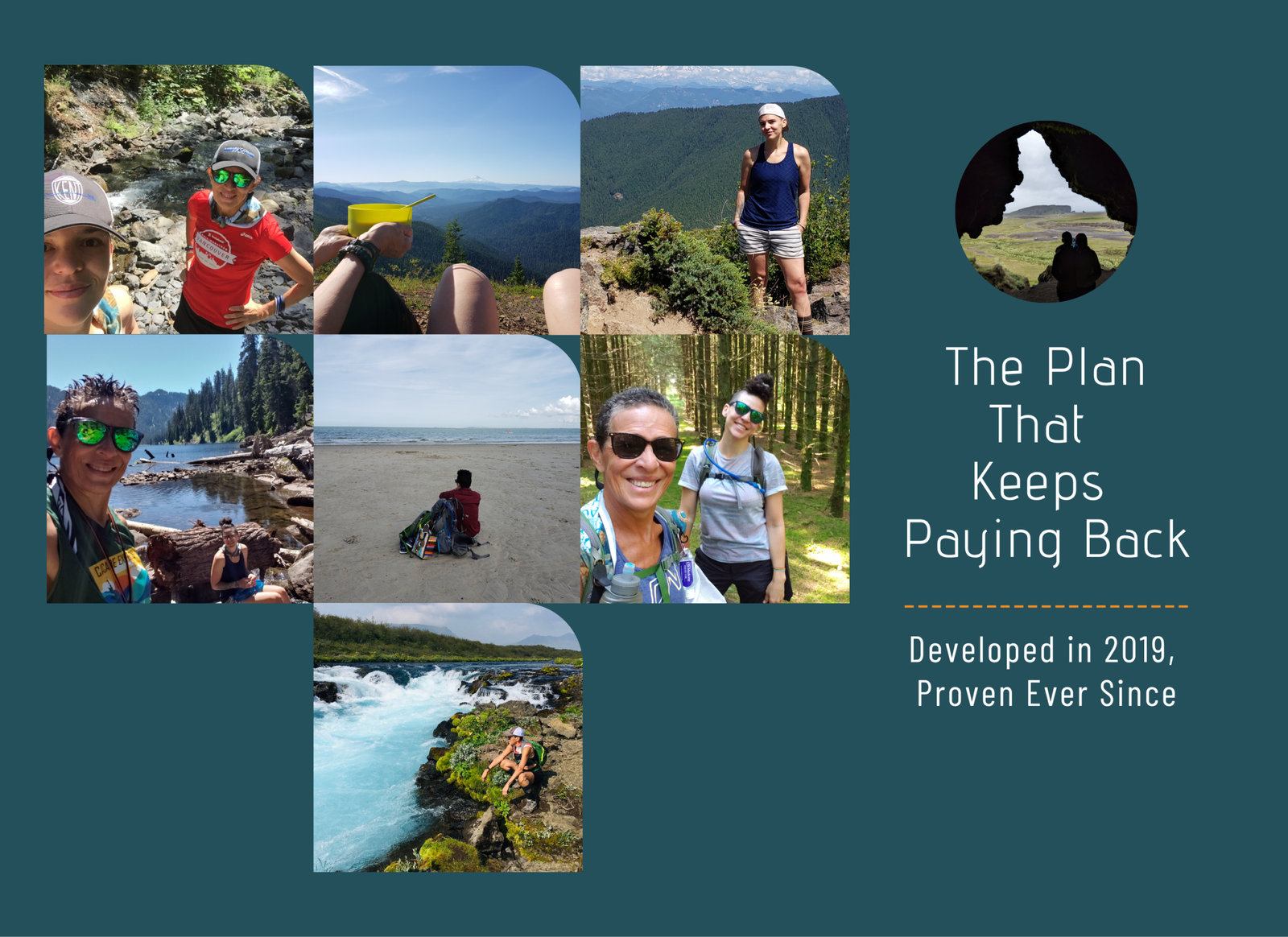
When Alejandra and I developed the baseline for our annual backpacking trip back in 2019, we did so with a deliberate project management mindset. We were conscious that this wasn’t a one-off event; it was a repeatable process. A repeatable process that functions as a system with recognized variables that could be modified without impacting the overall purpose.
And the overall purpose? A project that would be executed every single year to honor the memory of our beloved son and brother, Diego.
By investing in a comprehensive strategic project planning the very first time, we made a long-term investment. That initial heavy lifting allowed us to dedicate just a bare minimum amount of time to planning each subsequent year.
That is the beauty of a repeatable process thought out as a system: it makes you radically efficient. It gives you time back to focus on what matters, preventing you from wasting energy re-solving problems that should have been put to bed during the initial design phase.
For the first four years, our baseline parameters were pretty much the same. Every trip would take place in the mountains of Washington State, and because the geographic ecosystem was fairly constant, almost the entire execution process remained exactly the same.
But in 2023, a major variable shifted. Alejandra, a key partner in this adventure of ours, moved to the Netherlands.
Shortly after her move, I was talking about her new destination with a close friend. This friend knows very well what we have gone through and exactly what this annual trek means in our healing process. With a sad tone, she looked at me and said, “Oh, no… you won’t be able to do your tribute trip anymore.”
Her response took me by surprise. In a narrow sense, she was right that the Washington State mountains were out of the picture, but the trip itself was perfectly viable. At the end of the day, the purpose of this annual adventure is to honor Diego in nature, with mindfulness, and just the two of us. And nature, mindfulness, and the two of us are still readily available—just somewhere else.
The Core of Systems Thinking
This realization gets to the very core of systems thinking and strategic project planning. Initially, our system baseline was optimized for the specific constraints of Washington State. When we removed that geographic constraint, the process shifted from routine execution to a deliberate audit of our variables. Changing the location allowed us to see which elements of our project plan were hardcoded to the Pacific Northwest (bears anyone?) and which were universally transferable. The feedback loop generated by this environmental shift didn’t break the system; it isolated the location-specific data points, allowing us to pivot the tactics while proving the framework itself was entirely borderless.
Systems are not static; they are dynamic. To keep a system alive and relevant, one must incorporate feedback loops that allow it to adapt to changing environments. Thinking of our own bodies: blood flows, resources are distributed, and heartbeats adapt automatically and accordingly. The body is constantly in motion, and those fluid dynamics are what keep it alive.
Similarly, any systems that incorporate robust feedback loops are the ones that survive disruptions. Each year, lessons learned are collected, analyzed, and evaluated to update the plan, which then serves as the basis for the following year’s trip.
So, with Alejandra settling into her new home in the Netherlands, we ran the new constraints through our system.
First up: logistics. We quickly discovered that wild camping is illegal in the Netherlands. Could we compromise a sliver of total isolation? We investigated Dutch campgrounds and specifically audited them to find the spots with the best layouts—the ones that offered a good degree of privacy. We found one and booked it. When the time came, we found the place to be very special. After setting up camp we were “happy campers.”
Since there are no mountains in the Netherlands, our daily excursions shifted to the ocean, walking along the coast, discovering treasures in the sand, and admiring the waves of the North Sea. We explored small towns and enjoyed our new discoveries.
By 2024, we located a private forest in rural Southern Denmark, staying in a log cabin that had neither water nor electricity, so basically the same way we camped in the mountains, with our shelter pivoting from a tent to a cabin placed in the middle of nowhere. The wildlife to pay attention to was the European Adder, a poisonous snake. Yikes! Still without mountains, our excursions adapted to the landscape: we trekked along marshes and through tall grass just to go “there.” Where is there? Wherever the journey took us.
In 2025, the system adapted to a climate that promised trouble: Iceland. Because of the volatile weather conditions and the extreme winds, we didn’t want to gamble with a tent, so we maintained our shelter pivot and rented a campervan. We camped in spectacular, raw landscapes, and though our transit from hike to hike was on wheels, our core operational requirement remained unchanged: we hiked for hours every single day and discovered everything we could within our timeline. No predators to fear of, but the most gorgeous bird there is: the puffin.
Key Takeaway
The ultimate takeaway here is that the repeatable process remains fixed; the location, shelter, and interconnected items are the dynamic variables that keep the system in motion.
Our annual preparation has now shrunk to a brief scoping exercise—a streamlined phase of our strategic project planning. We decide on the country, pick the specific spot, and evaluate that location against our original system. We pull out our comprehensive baseline list of items from 2019, scratch off the things that don’t apply (like a bear vault in Europe!), and adjust for location-dependent variables—such as shelter, whether we need a tent, a campervan, or a wood cabin.
The rest of the planning? It was already ‘bought and paid’ for with our effort and hours back in 2019.
Eight trips later, our core process hasn’t changed, and that original efficiency pays dividends year after year. And the payment is not in money, but in peace of mind, knowing that the system in place will solidly support a peaceful and memorable tribute.