
“Education is not the learning of facts, but the training of the mind to think.“
A. Einstein
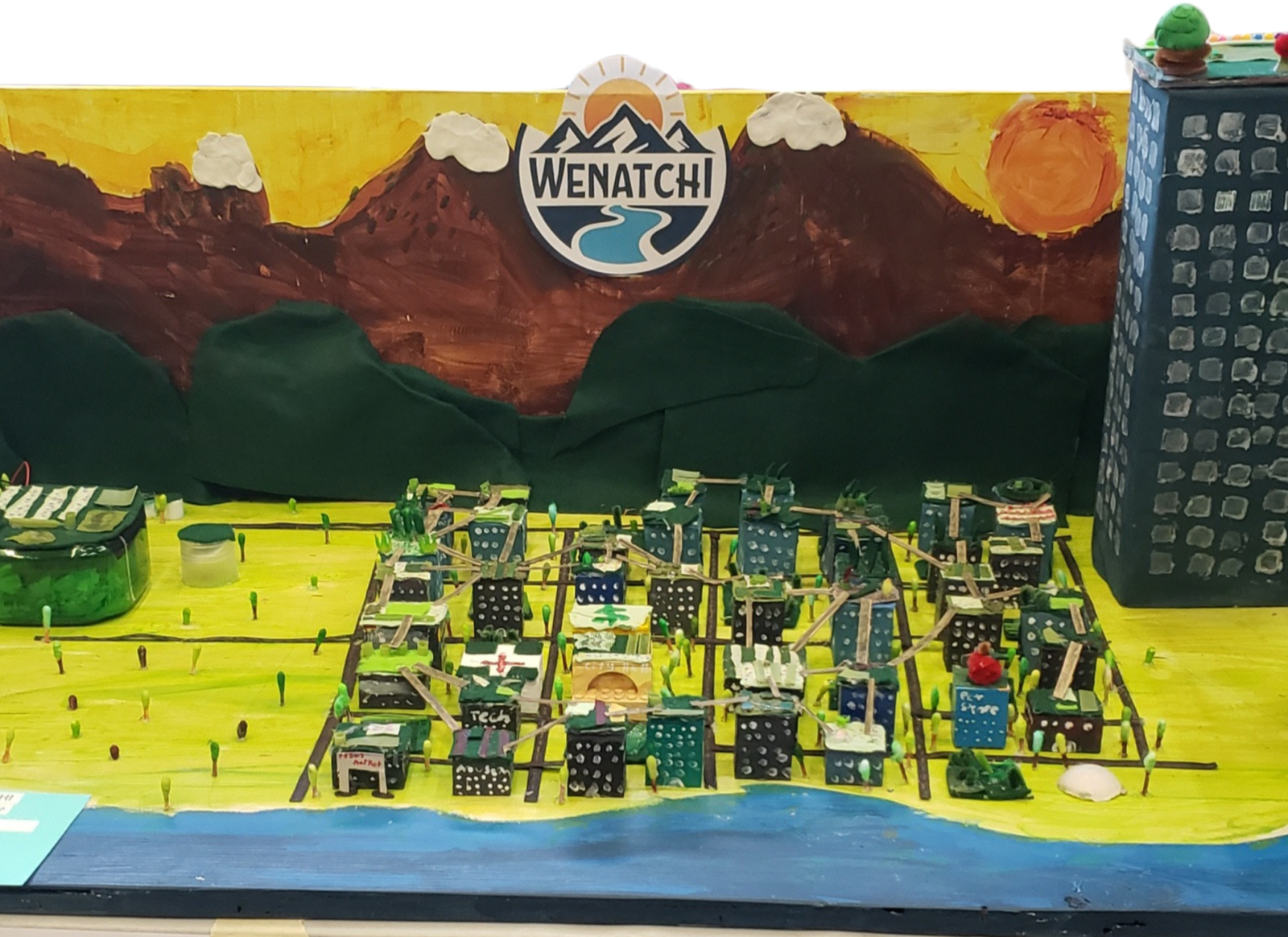
City of Wenatchi Project
On behalf of the Project Management Institute Educational Foundation (PMIEF), I had the pleasure of serving as judge for the Washington State region of Future City 2025–2026, the ultimate Science, Technology, Engineering, and Mathematics (STEM).
The Best Project Plan Award went to the City of Wenatchi, the redesign of the City of Wenatchee, located in the Wenatchee Valley, in Eastern Washington.
The project was planned and developed by a middle school team from the Valley Academy of Learning in the Wenatchee School District, under the guidance of educator Shelly Jelsing, and mentor Emilka Furmanczyk.
The team earned a perfect score in recognition of their outstanding use of project management concepts and their application of project management knowledge.
The team expanded on the core goal defined by Future City–design a city that eliminates food waste from farm to table and keeps citizens healthy and safe– and shaped their own project objectives around it including “balancing fun and work by combining “in-class” and at home research with fun presenters and potentially some fun outings (hatcheries, Rocky Reach Dam, or other).”
The team identified the resources available to them and those they still needed, surfaced key constraints and assumptions early, and translated the project scope into a detailed, calendar-based schedule. Roles and responsibilities were clearly defined, supported by a communications plan that helped the team stay aligned as the work progressed.
Throughout the project, they actively monitored their progress, making adjustments as challenges emerged and resolving issues that affected team performance.
As the project came to a close, they intentionally captured lessons learned, reflecting on what worked well and what they would approach differently in future projects.
Honorable Mentions
Honorable Mentions went to:
- Amicita, a city imagined by the Mississippi River, planned and developed by the Science Team, at @Redmond Middle School, Redmond, WA
- Northstar Harvesters, a city in Alaska, planned and developed by the team at Watershed Charter School, Fairbanks, AK.
________________________________________________________________
The Question That Drives Future City
At the core of the Future City program, was a simple but demanding question.
One that sets the tone for the work that middle school and high school students took on:
“How can we make the world a better place?
To answer it, students imagine, research, design, and build cities of the future that showcase their solution to a citywide sustainability issue.”
Farm to Table
The 2025–2026 Future City competition then challenged a record-breaking 85,000 middle and high school students nationwide to take a hard look at something we all do every day: eat.
The theme: Farm to Table.
Nearly 40% of food produced is wasted, even as millions go hungry, and that waste carries a heavy cost in land use, water consumption, and greenhouse gas emissions.
What feels convenient in modern cities often masks a system that is inefficient and unsustainable.
Students were challenged to examine how food travels from where it is grown to where it is consumed, and what gets lost along the way. How they would rethink the entire food system using circular economy principles, designing cities where food waste is not an afterthought but deliberately designed out.
They explored how food and materials could be reused, recycled, or repurposed through smarter planning, better systems, and emerging technologies.
The goal was ambitious and clear: design a future city that eliminates food waste from farm to table while keeping communities healthy, safe, and resilient.
Judging Student Innovation: City Design and Project Management in Action
I had the amazing opportunity to serve as a judge, evaluating high school students on their city essays and physical models, as well as middle school students on their understanding of project management concepts and their application of PM knowledge.
To say the commitment of these students is impressive would be an understatement. Applying the full cycle of the engineering design process, from problem identification and understanding specifications and requirements, to brainstorming, research, defining their city, planning, design, writing their essays, modeling the city, and building mock-ups, the depth and rigor of their work were evident.
Despite their nervousness, they stood there, presenting to the judges their designs, their reasoning, their planning challenges, timeline constraints, communication issues, conflict management, and lessons learned.
Watching how these students connected the technical, social, and environmental elements of their systems, negotiated trade-offs within their teams, and made deliberate decisions under constraints made one thing clear:
- They are learning how to approach complex challenges with structure and discipline, integrating research, planning, and design while navigating competing priorities.
- They are developing the ability to collaborate thoughtfully, weigh options carefully, and adjust their solutions as new constraints emerge, building the practical skills and systems thinking needed to turn ambitious ideas into tangible, well-executed outcomes.
Celebrating Future City Participants and Winners
Congratulations to the City of Wenatchi team for their strong application of project management, and to all 85,000 participants in Future City 2025–2026, including the regional winners selected between January 10 and January 24 and the national winners to be selected in February in Washington, D.C.
Being part of this process has become a meaningful way for me to give back on a lifetime of project management and engineering experience and expertise. I look forward to staying involved for as long as I am able, because it is so satisfying and an experience that doesn’t fails to put a smile on my face.