“It was the best of times, it was the worst of times, it was the age of wisdom, it was the age of foolishness…”
—C. Dickens, A Tale of Two Cities
Seattle & Amsterdam in Sync!
For Aponwao, this feels uncannily familiar, not in revolutionary France, but in the conditions under which work succeeds or falters.
The same operating environment can produce clarity or confusion, continuity or disruption. Our work between Seattle and Amsterdam—nine hours apart—reflects this reality.
My morning begins with reviewing my partner Alejandra’s insights from the previous day, and when I end my day, she picks up the baton seamlessly.
It is the age of wisdom when two people share enough understanding to act on each other’s behalf across distance and time; it is the age of foolishness when that trust is expected rather than established.
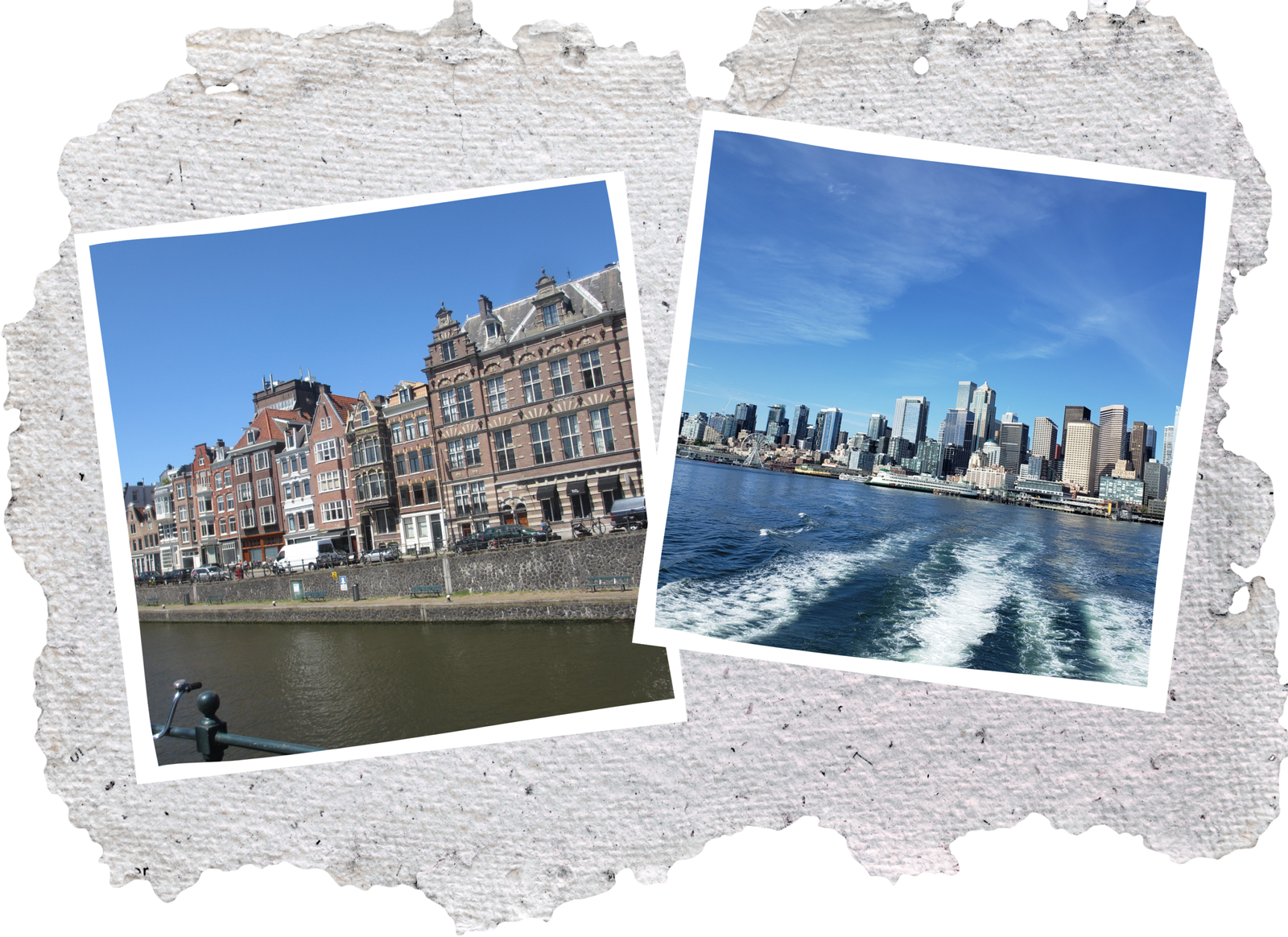
As I rise in the Greater Seattle Area, surrounded by towering evergreens and the calm of a quiet residential lake, Alejandra Moreno is already deep into her workday in Amsterdam. Across her window, she observes the steady flow of cyclists navigating the streets with the effortless coordination Dutch culture is known for.
This contrast is a vivid reminder of how different contexts can coexist in a shared workflow, provided communication is aligned and intentional. The time zone gap creates a working arrangement in which my morning begins with her completed work, and my day ends as she takes responsibility for what comes next.
Communications Alignment: A Pillar of Our Methodology
At Aponwao, communications alignment is more than a tool. It is a central pillar of our holistic methodology for solving problems.
A lack of effective communication and shared understanding within a team is one of the main factors causing project disruption. More than 50% of projects fail due to this. This challenge is amplified when teams operate across time zones, a scenario that applies to an increasing number of projects today.
When team members collaborate under any conditions that separate responsibility, clear, intentional, and structured communication ensures that work is coherent, continuous, and high-quality, and that understanding and trust are preserved across every handoff.
Here are the four main strategies that allow us to maintain this alignment:
1. Intentional Alignment of Understanding
Beyond meetings, documents, and shared tools, the most critical element is a shared understanding between the people doing the work. This goes beyond clarity on tasks. It is knowing each other well enough to anticipate needs, interpret intentions correctly, and act decisively in the other’s absence. By cultivating this mutual alignment, we preserve continuity, reduce missteps, and maintain progress even when distance, time differences, or complex dependencies could otherwise introduce ambiguity.
2. A Dedicated Visibility Room (Vis Room)
We maintain a shared Google Slides space called the Vis Room, where we exchange notes on virtual post-its throughout the week. Each post-it is color-coded according to a legend, indicating whether it is a task, a question, a decision point, or contextual information. This shared space ensures communications remain effective, clear, timely, and relevant, providing visibility without requiring synchronous meetings for every update.
3. A Set Midweek Alignment Meeting
We meet every week at the same time and in the same “vis room” to review progress, clarify priorities, and address emerging questions. With Seattle and Amsterdam nine hours apart, timing is a strategic exercise: 5 am in Seattle is 2 pm in the Netherlands—a window that allows meaningful conversation without intruding on either of our core work hours. These meetings are not simply check-ins—they are alignment sessions that ensure the intent behind tasks and decisions is understood and shared.
4. A Collaborative Action Items Document
To complement the Vis Room, we maintain a shared Action Items document that tracks ownership, status, and dependencies for every task. This creates clarity and accountability while minimizing the risk of missed responsibilities, keeping both of us informed and aligned.
Turning Time Zones into an Advantage
Even with the geographical distance between lively Seattle and vibrant Amsterdam, our approach enables seamless collaboration. The time zone difference, rather than being a barrier, becomes an asset: it enables continuous workflow, deliberate review, and uninterrupted progress.
Ultimately, what makes this system work is intentionality.
At Aponwao, we understand that solving complex problems requires more than expertise and tools. It requires a disciplined approach to how we communicate, how we share context, and how we ensure alignment across every step of a project.
Across oceans and time zones, alignment keeps our work moving forward efficiently, coherently, and with purpose, navigating the Dickensian conundrum between clarity and uncertainty to maintain a steady rhythm of productivity.